
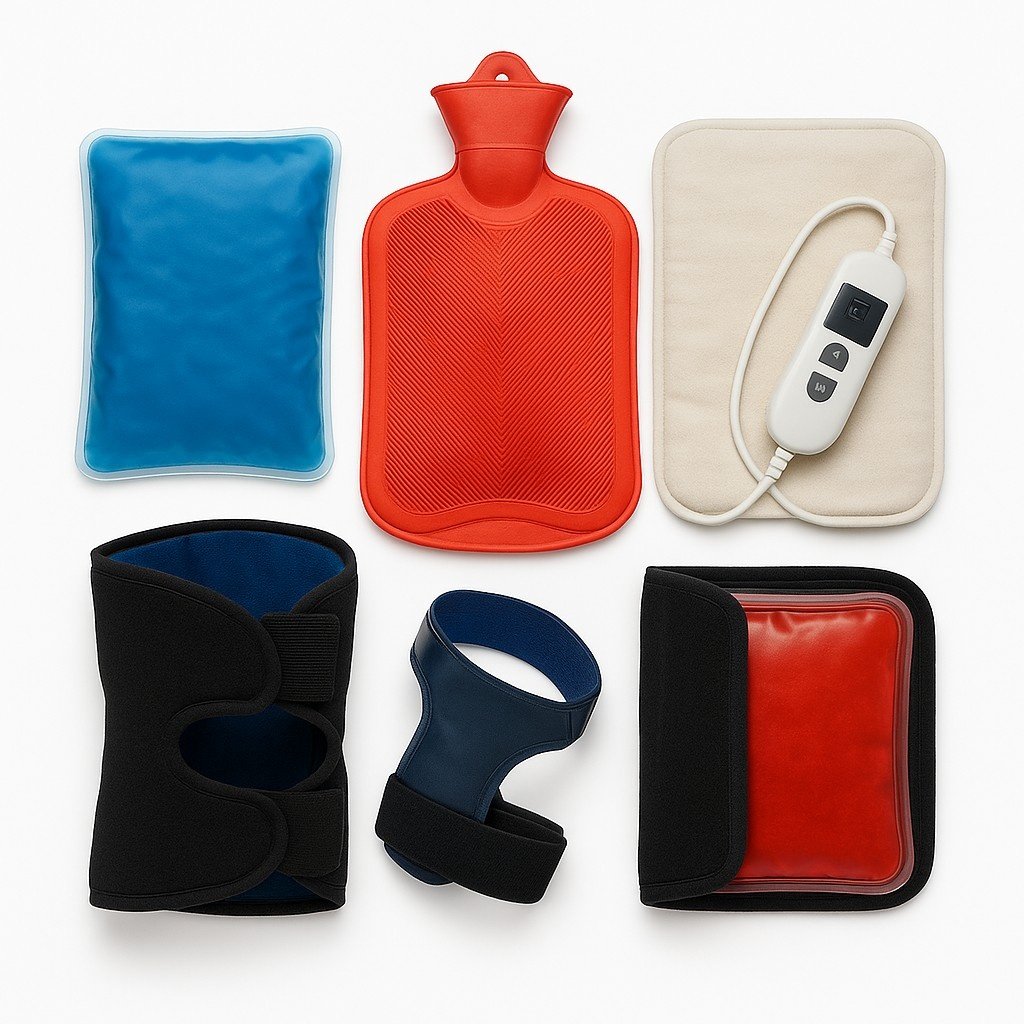
Description
Heat and cold applications are common, non-invasive therapeutic techniques used to manage pain, inflammation, and injuries. They are often the first line of treatment to reduce discomfort and promote healing.
Heat Applications
Purpose
-
Soothes sore muscles
-
Reduces muscle spasms
-
Improves blood circulation
-
Ideal for chronic conditions like arthritis or for pre-activity muscle relaxation
Types
-
Moist Heat
-
Warm towels
-
Moist heating pads
-
Warm baths
-
-
Dry Heat
-
Heating pads
-
Warm water bottles
-
Benefits
-
Increases blood flow, delivering more oxygen and nutrients to tissues
-
Relaxes muscles and reduces joint stiffness
-
Eases pain from:
-
Muscle tension
-
Chronic conditions
-
Menstrual cramps
-
Application Tips
-
Apply heat for 15–20 minutes at a time
-
Use a cloth barrier to prevent skin burns
-
Avoid heat on:
-
Open wounds
-
Areas with poor circulation
-
Cold Applications
Purpose
-
Reduces inflammation and swelling
-
Numbs pain in acute injuries
-
Restricts blood flow to control bruising and tissue damage
Types
-
Ice Packs
-
Gel packs
-
Bags of ice
-
Frozen towels
-
-
Cold Compresses
-
Cloth soaked in cold water
-
Benefits
-
Decreases swelling and inflammation
-
Numbs pain in the affected area
-
Minimizes bruising
Application Tips
-
Use cold for 10–15 minutes with a cloth barrier
-
Never apply directly to skin to avoid frostbite
-
Best used within 48 hours post-injury
-
Avoid prolonged cold use, which may delay healing
Combination and Precautions
Alternating Heat and Cold
-
Useful for certain injuries and chronic conditions
-
Helps control inflammation while reducing stiffness
-
Can promote faster recovery and pain relief
Precautions
-
Always monitor the skin for redness, burns, or frostbite
-
Avoid heat on new injuries—it can worsen inflammation
-
Stop use if irritation or increased discomfort occurs


Reviews
There are no reviews yet.