
Description
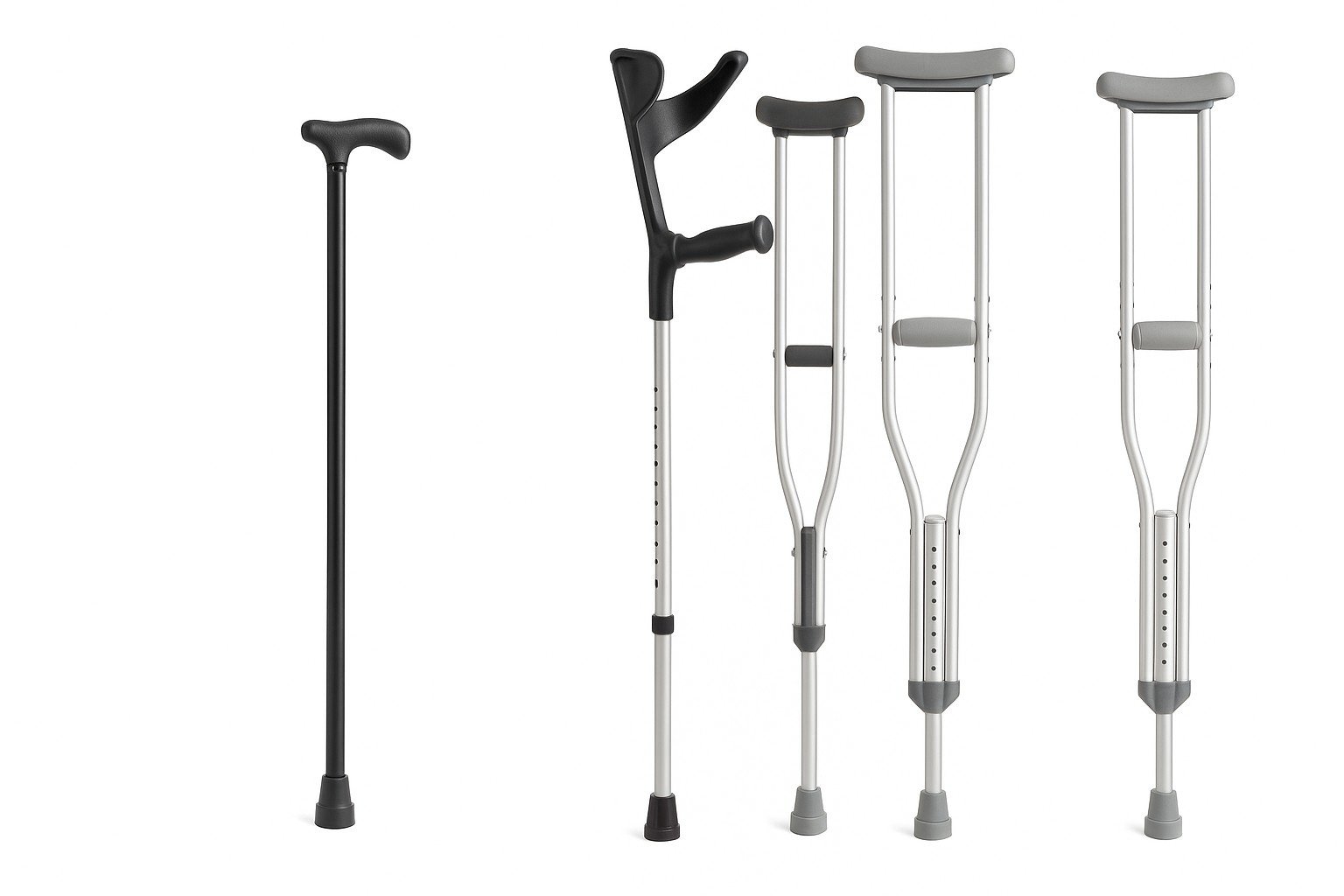
Canes and crutches are commonly used mobility aids designed to provide support for individuals with temporary or long-term walking difficulties due to injury, surgery, or balance issues.
Canes
Usage:
-
Ideal for individuals with mild balance problems, leg weakness, or hip pain.
-
Commonly used when only one side of the body needs support.
Types of Canes:
-
Single-Point Canes – Basic cane with a single tip for light support.
-
Quad Canes – Have a four-point base for greater stability.
-
Folding Canes – Portable and easy to store.
-
Adjustable Height Canes – Customizable for user height and comfort.
Benefits:
-
Improves balance and stability.
-
Reduces strain on joints.
-
Enhances confidence and independence in walking.
Crutches
Usage:
-
Suitable for individuals with more severe mobility limitations, such as:
-
Bone fractures
-
Post-surgery recovery
-
Severe sprains
-
Types of Crutches:
-
Axillary (Underarm) Crutches – Most common; placed under the arms.
-
Forearm (Elbow) Crutches – Provide forearm support; often used for long-term conditions.
-
Platform Crutches – Feature a horizontal support platform for the forearm, ideal for individuals with limited hand or wrist strength.
Benefits:
-
Allows for non-weight bearing on the injured leg or foot.
-
Promotes safe and supported mobility during recovery.
Important Considerations
-
Proper Fit and Adjustment
-
Height and grip should be adjusted to prevent strain and ensure safety.
-
Canes: Elbow should be bent 15–30 degrees when holding.
-
Crutches: Top pad should be 1–2 inches below the armpit; handgrip should allow a slight bend in the elbow.
-
-
Correct Technique
-
Learn and practice the proper walking pattern (e.g., “crutch-walk” or “step-through” method).
-
Incorrect use can lead to falls, discomfort, or nerve pressure (especially with underarm crutches).
-


Reviews
There are no reviews yet.